
Best Crypto Wallet UAE 2026: Secure Options for UAE Crypto Investors
Looking for the Best crypto wallet UAE 2026? This guide explains the safest wallet options for UAE investors, including hardware wallets, mobile wallets, exchange wallets, self-custody, UAE crypto regulations, and key security tips for protecting digital assets.
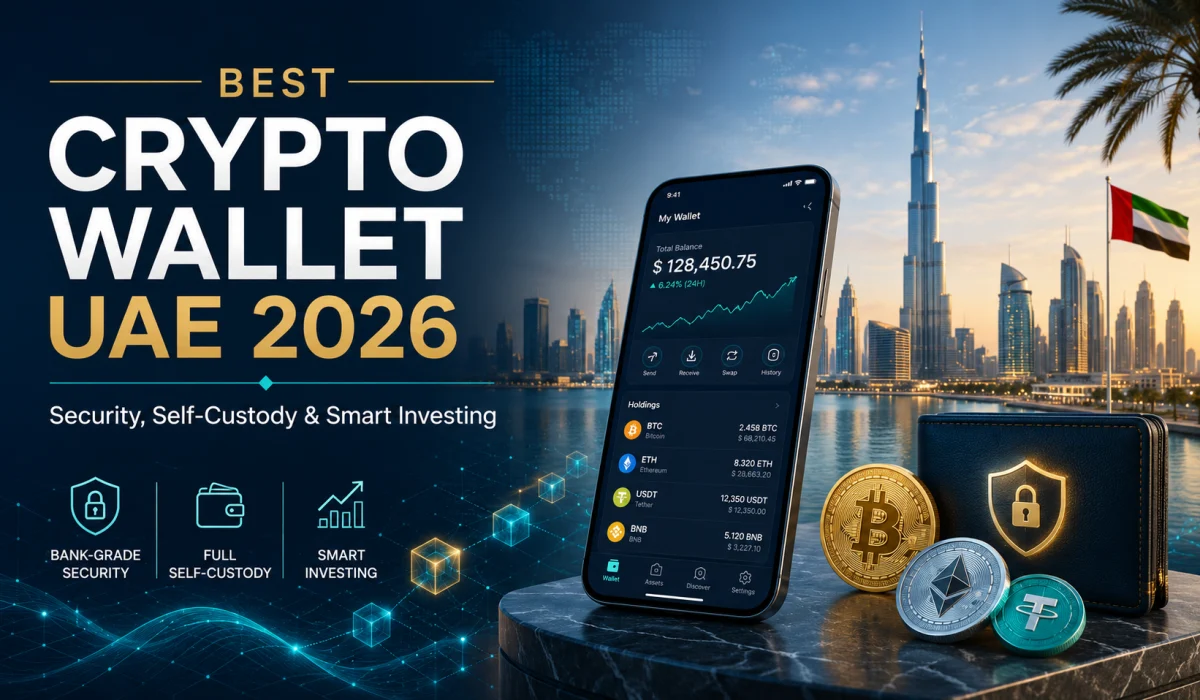
The search for the Best crypto wallet UAE 2026 is becoming more important as digital assets move deeper into the UAE’s financial ecosystem. With Dubai’s VARA framework, Abu Dhabi’s growing institutional crypto sector, and Central Bank rules around payment tokens, UAE investors now need wallets that offer more than simple coin storage. A good wallet must balance security, ease of use, local exchange compatibility, compliance awareness, and control over private keys.
Why Crypto Wallet Choice Matters in the UAE
A crypto wallet is not just an app. It is the tool that controls access to Bitcoin, Ethereum, stablecoins, NFTs, and other digital assets. In the UAE, where crypto adoption remains strong and regulation is becoming more structured, choosing the right wallet can reduce risks linked to hacks, phishing, unlicensed platforms, and poor custody practices.
Dubai’s Virtual Assets Regulatory Authority says it regulates and oversees the “provision, use, and exchange of virtual assets in and from the emirate of Dubai.” VARA also maintains a public register of licensed virtual asset service providers, which is important for users who connect wallets to exchanges or custodians. (vara.ae)
Custodial vs Self-Custody Wallets
The first decision UAE investors must make is whether to use a custodial wallet or a self-custody wallet.
A custodial wallet is usually provided by an exchange or crypto platform. The platform manages private keys for the user. This is convenient for beginners because account recovery, AED deposits, trading, and customer support are easier. However, users depend on the platform’s security and solvency.
A self-custody wallet gives the user control of private keys or seed phrases. This offers stronger ownership but also more responsibility. If the seed phrase is lost, stolen, or exposed, funds may be gone permanently.
For long-term investors, many experts prefer self-custody. Ledger’s UAE crypto guide argues that “the only way to truly own and protect your crypto” over the long term is through self-custody, while also warning that crypto risks remain significant. (Ledger)
Best Crypto Wallet UAE 2026: Top Categories to Consider
There is no single wallet that is best for every UAE user. The Best crypto wallet UAE 2026 depends on whether the investor wants trading convenience, long-term storage, DeFi access, or institutional-grade custody.
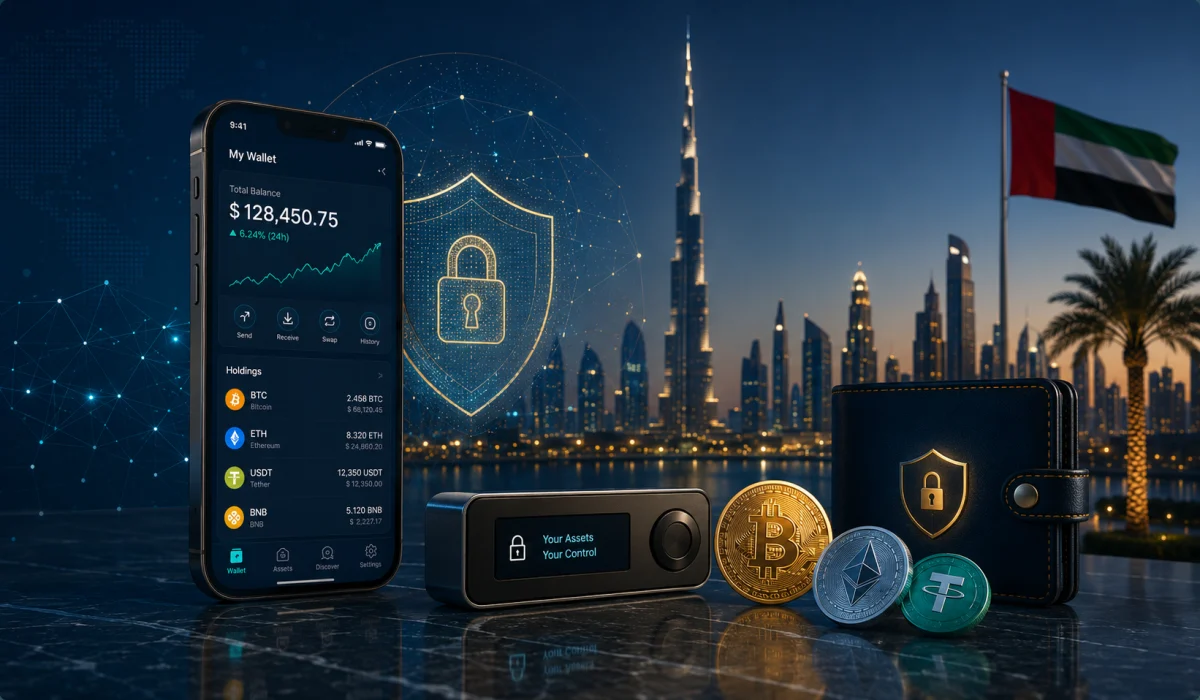
1. Hardware Wallets for Long-Term Security
Hardware wallets such as Ledger and Trezor are often preferred by serious investors because private keys are stored offline. This reduces exposure to malware, browser attacks, and exchange failures. They are suitable for Bitcoin, Ethereum, stablecoins, and multi-chain portfolios.
Hardware wallets are best for UAE users who hold large balances, plan to invest long term, or want protection from exchange-related risks. The downside is that they require careful seed phrase storage and may feel less convenient for daily trading.
2. Mobile Wallets for Everyday Access
Mobile wallets such as Trust Wallet, MetaMask Mobile, Coinbase Wallet, and SafePal are popular because they are easy to install and support many assets. They are useful for DeFi, NFTs, swaps, and quick transfers.
However, UAE users should be careful when connecting mobile wallets to decentralized applications. Fake websites, malicious wallet approvals, and phishing links are common. A mobile wallet is convenient, but it should not be the only place to store large crypto holdings.
3. Exchange Wallets for Beginners
For beginners, exchange wallets connected to licensed or locally accessible platforms can be easier to use. They often support buying crypto with AED, completing KYC with UAE documents, and withdrawing to bank accounts.
VARA has emphasized the importance of using licensed providers. Its public register is designed to help users verify regulated virtual asset service providers in Dubai. (vara.ae) UAE-focused crypto resources also note that licensed exchanges serving UAE users include entities such as OKX, Binance FZE, BitOasis, and Bitpanda, though users should always verify licensing directly with the regulator before depositing funds. (Bitcoiners.ae)
UAE Regulation: What Wallet Users Should Know
The UAE has not banned Bitcoin. In a November 2025 market alert, VARA clarified that “Bitcoin is not banned in the UAE” and that virtual assets remain permissible under applicable UAE rules. (vara.ae)
However, payment use is different from investment use. The UAE Central Bank’s Payment Token Services Regulation covers payment token issuance, conversion, custody, and transfer. The Central Bank states that payment token services are digital payment services in the UAE and require licensing or registration under its framework. (rulebook.centralbank.ae)
This means UAE investors should separate two ideas: holding crypto as an investment and using crypto as a regulated payment instrument. Wallets may store digital assets, but payment activity can fall under stricter rules.
Security Checklist for UAE Crypto Wallet Users
Before choosing the Best crypto wallet UAE 2026, investors should check:
Private key control: Does the wallet give you full control of your seed phrase?
Regulatory compatibility: Can it connect safely with licensed UAE exchanges?
Asset support: Does it support Bitcoin, Ethereum, stablecoins, and networks you actually use?
Backup options: Can you securely store and recover your seed phrase?
Reputation: Has the wallet been independently reviewed or widely used?
Phishing protection: Does it warn against suspicious approvals or malicious apps?
For larger portfolios, a strong setup is to use a regulated exchange for buying and selling, then transfer long-term holdings to a hardware wallet. Smaller amounts for trading or DeFi can remain in a mobile wallet.
What Is the Best Option for Beginners?
For new UAE investors, the best approach is usually a combination: start with a regulated exchange wallet for simple AED onboarding, then move long-term assets to a hardware wallet. This avoids relying completely on one platform while keeping the buying process simple.
Advanced users may prefer MetaMask, Rabby, Trust Wallet, or SafePal for DeFi, but they should use spending limits, revoke old approvals, and avoid signing unknown transactions.
Final Verdict
The Best crypto wallet UAE 2026 is not one product. It is a secure wallet strategy. Beginners may start with a licensed exchange wallet, active users may prefer a trusted mobile wallet, and long-term investors should strongly consider hardware self-custody.
As UAE crypto regulation becomes more mature, investors should prioritize wallets that support security, transparency, and responsible use. The safest choice is not always the easiest app; it is the wallet setup that protects private keys, works with compliant platforms, and matches the investor’s risk level.
References
- VARA official website and public register information. (vara.ae)
- VARA market alert clarifying Bitcoin and self-custody claims. (vara.ae)
- UAE Central Bank Payment Token Services Regulation. (rulebook.centralbank.ae)
- Ledger UAE crypto guide, May 2026. (Ledger)
- UAE exchange licensing summaries and market references. (Bitcoiners.ae)
Comments
No comments yet — be the first to start the conversation.
Leave a comment
You might also like
Crypto exchanges Dubai move from hype to hard regulation
Dubai’s crypto exchange market is shifting from rapid expansion to strict regulation, stronger compliance, and institutional-grade oversight. Exchanges including Binance, OKX, Crypto.com, Bybit, and BitOasis are competing through licensing, AED banking access, liquidity, security, and custody infrastructure as Dubai strengthens its position as a regulated global crypto hub.