
Dubai Positioned for Crypto Influx as Europe's MiCA Rules Trigger Industry Reassessment
Dubai could attract more crypto firms as MiCA regulations reshape Europe's market, boosting demand for alternative hubs.

New EU regulations are prompting crypto companies to explore alternative jurisdictions, with Dubai emerging as a preferred destination for expansion.
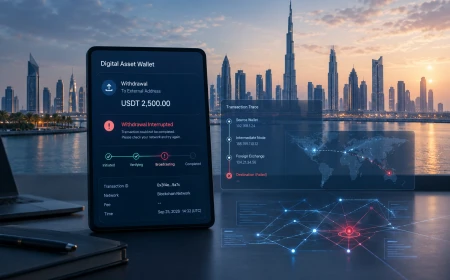
Dubai is poised to attract a new wave of cryptocurrency companies as Europe's landmark Markets in Crypto-Assets (MiCA) regulation reaches its final implementation stage, forcing digital asset firms across the continent to reassess their long-term operating strategies.
The European Union's transition period under MiCA officially concluded on July 1, 2026, requiring crypto service providers operating within the bloc to obtain regulatory authorization or face restrictions, penalties, or an orderly market exit. While the framework has been welcomed by many institutional investors seeking greater regulatory clarity, industry participants argue that increased compliance obligations and licensing complexities may encourage some firms to establish operations outside Europe.
Dubai, which has spent the past several years positioning itself as a global digital assets hub, appears to be one of the biggest beneficiaries of this shift.
Europe Faces a Defining Moment for Crypto
MiCA is widely considered the most comprehensive crypto regulatory framework implemented by a major economic bloc. The legislation introduces harmonized rules governing exchanges, custodians, brokers, stablecoin issuers, and other crypto-asset service providers across the European Union.
Beginning July 1, companies wishing to serve customers within the EU are required to possess a MiCA license issued by a member state regulator, enabling passporting rights throughout the 27-country bloc.
However, numerous firms have struggled to meet the deadline.
Industry estimates suggest that by May 2026, fewer than 20% of the more than 1,200 registered crypto companies in Europe had secured authorization under MiCA, leaving hundreds of businesses facing uncertainty regarding future operations.
Regulators have emphasized that no additional grace periods will be granted.
Carlos San Basilio, Chairman of Spain's securities regulator, recently confirmed that companies failing to obtain licenses would not receive extensions or waivers.
European authorities have also instructed unlicensed firms to wind down operations in an orderly manner.
Dubai Emerges as an Alternative
Legal advisors and consultants operating in the UAE report a significant increase in inquiries from European entrepreneurs seeking guidance on establishing operations in Dubai.
Irina Heaver, founder of Dubai-based legal consultancy NeosLegal, said her firm has experienced a sharp rise in requests from companies evaluating relocation strategies.
"European founders are increasingly looking at the UAE because they value speed, regulatory certainty and access to international markets beyond Europe," Heaver told CoinDesk.
She warned that excessive compliance burdens may result in a gradual migration of talent, innovation, tax revenues, and employment opportunities away from Europe.
"There is a genuine concern that MiCA could contribute to a brain drain if entrepreneurs feel growth opportunities are becoming constrained," she said.
Dubai's appeal stems from several factors, including dedicated crypto regulation, relatively quick licensing processes, favorable taxation policies, and growing institutional participation in the digital assets ecosystem.
The emirate has also developed a reputation for maintaining a collaborative relationship between regulators and industry stakeholders.
VARA's Growing Influence
A major catalyst behind Dubai's rise as a crypto destination has been the establishment of the Dubai Virtual Assets Regulatory Authority (VARA).
Launched in 2022, VARA became one of the world's first regulators dedicated exclusively to virtual assets.
The regulator has since issued licenses to exchanges, blockchain firms, trading platforms, custodians, and digital asset service providers seeking to operate within Dubai's ecosystem.
Industry participants frequently cite VARA's transparent licensing framework as a competitive advantage.
Compared with jurisdictions where crypto oversight remains fragmented among multiple agencies, Dubai offers businesses a single point of engagement for virtual asset regulation.
Market observers suggest this approach has significantly reduced uncertainty for startups and institutional investors alike.
Dubai's Crypto Ecosystem by the Numbers
| Indicator | Figures |
|---|---|
| MiCA Compliance Deadline | July 1, 2026 |
| EU Registered Crypto Firms | 1,200+ |
| Firms Licensed Under MiCA (May 2026) | Less than 20% |
| Global Binance Users | 300+ million |
| Compliance Employees at Binance | 1,500 |
| Weekly UAE Relocation Inquiries Reported by NeosLegal | 120+ |
| Share of Inquiries Originating from Europe | Approximately 50% |
| Dedicated Crypto Regulator in Dubai | VARA |
| UAE Capital Gains Tax on Individuals | 0% |
Sources: CoinDesk, Reuters, ESMA, NeosLegal.
Major Exchanges Face Pressure
The changing regulatory landscape has already affected some of the industry's largest players.
Binance, the world's biggest cryptocurrency exchange by trading volume, has encountered difficulties securing a MiCA authorization before the deadline.
Reuters reported that the company explored licensing options in several jurisdictions, including Greece, Ireland, and Latvia, but faced regulatory resistance.
The company maintains that it remains committed to Europe despite recent setbacks.
"Binance is not leaving Europe. We may simply have a different pathway to authorization," Gillian Lynch, Head of Europe and the UK at Binance, told Reuters.
Nonetheless, uncertainty surrounding licensing timelines has prompted competitors to target affected users.
Coinbase, OKX, Bitpanda, and several regulated exchanges are already seeking to capture market share as Europe's crypto sector enters a new regulatory era.
Why Dubai Is Attractive for Crypto Firms
Several competitive advantages continue to strengthen Dubai's position.
1. Regulatory Clarity
Crypto firms often prioritize certainty over leniency.
Businesses prefer knowing precisely what rules apply and how licensing requirements evolve over time.
Dubai has actively communicated its expectations regarding governance, cybersecurity, anti-money laundering procedures, and investor protection.
2. Speed to Market
Industry lawyers indicate that obtaining approvals in the UAE can be significantly faster than navigating multiple regulatory systems across Europe.
For startups operating in a rapidly evolving industry, speed can determine whether companies capture market opportunities or lose ground to competitors.
3. Access to Emerging Markets
Dubai provides a strategic gateway connecting Europe, Asia, Africa, and the Middle East.
Companies establishing regional headquarters in the UAE gain access to high-growth markets with expanding interest in blockchain technologies.
4. Talent Mobility
The UAE's visa programs, entrepreneur-friendly initiatives, and international lifestyle continue attracting founders, developers, and investors.
This ecosystem effect strengthens Dubai's ability to compete with traditional financial centers.
Institutional Interest Continues Growing
Beyond startups, institutional investors are also increasingly paying attention to Dubai.
Family offices, sovereign wealth entities, fintech companies, and venture capital firms have expanded digital asset allocations over the past three years.
The UAE government has openly supported blockchain adoption initiatives, tokenization projects, and Web3 innovation.
Several major global crypto companies have already established regional offices in Dubai, viewing the emirate as a long-term strategic base rather than merely a tax-efficient jurisdiction.
Industry analysts believe this institutional momentum may accelerate if regulatory pressures intensify elsewhere.
A New Competitive Landscape
While MiCA is expected to improve investor protections and strengthen confidence in Europe's crypto markets over time, the transition period may reshape the industry's geographical distribution.
Companies capable of meeting strict compliance standards are likely to remain within Europe and benefit from passporting rights across member states.
Others may adopt hybrid operating models, maintaining regulated European entities while expanding commercial activities through jurisdictions such as Dubai.
For Dubai, the timing appears advantageous.
As global crypto regulation becomes increasingly fragmented, cities able to provide predictability, efficient licensing mechanisms, and supportive ecosystems are expected to attract a disproportionate share of investment.
The coming months will reveal whether MiCA becomes a catalyst for consolidation within Europe or an opportunity for international hubs like Dubai to strengthen their influence in the evolving digital assets economy.
What is becoming increasingly clear is that Dubai has positioned itself as one of the leading contenders in the race to become a global center for blockchain innovation, digital finance, and the next generation of crypto entrepreneurship.
What's Your Reaction?
 Like
0
Like
0
 Dislike
0
Dislike
0
 Love
0
Love
0
 Funny
0
Funny
0
 Wow
0
Wow
0
 Sad
0
Sad
0
 Angry
0
Angry
0
Finance news and analysis writer with two years of experience covering markets, AI, cryptocurrency, fintech, blockchain, investment trends, and digital economy developments for global readers.












Comments (0)