
Positron Opens First Overseas Base at DIFC as Dubai Expands AI Finance Push.
Positron opened its first overseas base at DIFC, strengthening Dubai’s AI finance ecosystem and supporting demand for efficient inference hardware across banks, fintech firms, insurers, and enterprise platforms.

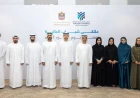
Positron DIFC is now a key development in Dubai’s artificial intelligence and finance story. Positron, a US-based AI chip company, has established its first presence outside the United States at Dubai International Financial Centre, according to the Emirates News Agency, WAM.
The move places a specialist AI hardware company inside one of the Middle East’s strongest financial centres. It also comes as the UAE is investing heavily in artificial intelligence, cloud infrastructure, financial technology, digital assets, and data-centre capacity.
For Dubai, this is not only a normal company expansion. It is a signal that the emirate wants to attract firms that build the core infrastructure behind AI. Positron focuses on AI inference, the part of artificial intelligence that runs trained models and gives answers to users.
Inference is becoming a major cost for companies. Banks, fintech firms, insurers, trading firms, government platforms, and enterprise users all need faster and cheaper ways to run AI models. That is why Positron’s arrival in DIFC matters for finance.
The company says its technology is designed to reduce power use and improve the economics of AI inference. If those claims convert into regional customers, Positron’s Dubai base could help link AI hardware, financial capital, and enterprise demand across the Gulf.
Why Positron DIFC Matters
The Positron DIFC announcement comes at a time when Dubai is trying to move from fintech growth to AI-led financial services. DIFC already hosts banks, wealth managers, asset managers, insurers, brokers, fintech firms, and family offices. These firms are now exploring AI for research, compliance, trading support, fraud checks, customer service, and document analysis.
AI software needs compute power. That compute power depends on chips, memory, cooling, electricity, cloud infrastructure, and data centres. This is why AI hardware is now part of the finance discussion.
Training AI models receives most of the attention. But many companies will not train large models from scratch. Instead, they will use existing models and run them many times for business tasks. This is called inference.
Every customer question, compliance query, market report, internal chatbot request, and document review creates an inference cost. At small scale, this cost may look manageable. At enterprise scale, it can become a boardroom issue.
Positron says it is building hardware for this exact problem. Its products aim to run transformer-based AI models with better power efficiency and lower cost. For a financial centre like DIFC, that could be relevant to banks and fintechs that want AI tools without uncontrolled infrastructure spending.
What Positron Does
Positron is a US-headquartered AI hardware company based in Reno, Nevada. It was founded in 2023 and focuses on inference-optimised systems. The company is not trying to build a general-purpose chip for every computing task. Instead, it is targeting transformer model inference.
Transformer models are the foundation of many modern AI systems. They power chatbots, coding assistants, document tools, research platforms, and many generative AI applications. These systems need large memory and fast processing when they serve many users.
Positron’s first major product is called Atlas. The company describes Atlas as a transformer inference server. According to Positron, Atlas is already shipping and is designed for power-efficient AI model serving.
The company’s next architecture is called Asimov. Positron describes Asimov as custom AI accelerator silicon built for memory-bound inference. The company says it is planned for 2027.
Positron also describes Titan as its next-generation system built around Asimov. Titan is aimed at large models, long-context AI, and high-volume enterprise inference.
Product Overview
| Product | Status | Main Focus | Finance Relevance |
|---|---|---|---|
| Atlas | Shipping now | Transformer inference server | Can support AI assistants, compliance tools, research systems, and customer service platforms. |
| Asimov | Planned for 2027 | Custom AI accelerator silicon | Targets memory-heavy inference, which is useful for long documents and complex workflows. |
| Titan | Planned for 2027 | Next-generation inference system | Could support very large AI models and high-volume institutional use. |
Funding and Investor Signal
Positron has raised major funding in a short period. In February 2025, the company announced $23.5 million in funding to scale energy-efficient AI chips. In July 2025, it announced a $51.6 million Series A. In February 2026, it announced a $230 million Series B at a valuation above $1 billion.
The Series B round was co-led by ARENA Private Wealth, Jump Trading, and Unless. Strategic investors included Qatar Investment Authority, Arm, and Helena. Existing investors also took part.
This investor mix is important. It connects Positron to private wealth, trading technology, semiconductor infrastructure, and Gulf institutional capital. That combination fits the company’s Dubai move.
“Energy availability has emerged as a key bottleneck for AI deployment.”
— Mitesh Agrawal, CEO of Positron AI, in the company’s Series B announcement.
The quote explains the core business problem. AI is growing quickly, but power and infrastructure are major limits. If a company can reduce the energy needed to run AI models, it can improve margins for customers and reduce pressure on data centres.
The Finance Angle
The Positron DIFC move is especially relevant for finance. Financial firms are heavy users of data, documents, models, and automation. They also operate in a strict regulatory environment.
Banks may use AI to improve customer service, review loan documents, detect fraud, and support compliance. Asset managers may use AI for research, portfolio analysis, and reporting. Insurers may use AI for claims handling, underwriting, and risk review.
All these use cases need reliable inference. They also need cost control. A bank cannot build a customer-facing AI system if each answer becomes too expensive. A wealth manager cannot scale AI research tools if the infrastructure cost rises faster than revenue.
This is why inference hardware matters. It can affect the cost per query, the speed of response, and the ability to scale AI tools across an organisation.
For DIFC-based firms, Positron’s regional presence could create easier access to AI infrastructure discussions. It may also support partnerships with cloud providers, fintech platforms, data-centre operators, and enterprise AI companies.
DIFC’s Role in the AI Economy
Dubai International Financial Centre is one of the leading financial hubs in the Middle East, Africa, and South Asia region. It has become a base for global banks, hedge funds, asset managers, insurers, fintechs, family offices, and professional services firms.
This makes DIFC a useful location for a company like Positron. AI hardware companies need more than technical performance. They also need customers, investors, legal certainty, and access to decision-makers.
DIFC offers that environment. It brings together capital, regulation, and financial institutions in one district. For an AI infrastructure company, that can shorten the path to business development and strategic partnerships.
The move also supports Dubai’s ambition to become a centre for future finance. Fintech changed payments, lending, onboarding, brokerage, and wealth services. AI may now change research, compliance, advisory, risk, and customer engagement.
Companies like Positron sit below that change. They provide the hardware layer that helps AI software operate at scale.
UAE AI Infrastructure Push
The UAE is also building the physical infrastructure needed for AI. The country has moved quickly into data centres, sovereign AI projects, cloud partnerships, and large-scale compute initiatives.
One of the biggest examples is Stargate UAE, a planned AI data-centre project in Abu Dhabi. Reports say the first 200 MW of capacity is expected to begin operations in 2026. The wider project is planned to reach much larger capacity over time.
Major technology names have been linked to this AI infrastructure push. These include OpenAI, Oracle, Nvidia, Cisco, SoftBank, G42, and others. The goal is clear: the UAE wants to become a serious AI compute hub.
Dubai’s role is different but connected. Abu Dhabi may lead some of the largest infrastructure projects. Dubai, through DIFC and other innovation zones, can lead in finance, investment, enterprise adoption, and AI-enabled services.
This gives Positron a strong reason to be in Dubai. The company can access regional investors, financial institutions, AI buyers, and strategic partners from a single business hub.
Original Research: What This Expansion Signals
The Positron DIFC expansion signals four important market shifts.
1. AI compute is becoming part of finance
Compute is no longer only a technical cost. It is becoming a financial input. Firms may need to budget, finance, lease, and optimise compute in the same way they manage other major infrastructure costs.
A trading firm may care about speed. A bank may care about secure deployment. A fintech may care about cost per customer interaction. An insurer may care about document processing volume. These needs turn AI infrastructure into a financial decision.
2. Dubai is moving higher in the AI value chain
Dubai has already attracted fintechs, crypto firms, digital banks, wealth platforms, and global investors. The next stage is AI infrastructure. Positron’s arrival shows that Dubai is not only attracting AI software companies. It is also attracting firms that work closer to the hardware layer.
3. Inference may matter more than training for most companies
Only a small number of firms will train frontier models. Most companies will use existing models and run them on their own data. That makes inference the daily cost centre.
This is important for finance. A bank may not need to train a giant model. It may need to run a secure model thousands or millions of times each day. This is exactly the type of demand Positron is targeting.
4. Energy efficiency is becoming a competitive advantage
AI growth is limited by power, cooling, hardware supply, and data-centre capacity. If a system can provide more useful AI output with less energy, it can improve the economics of AI deployment.
This is especially important in hot climates, where cooling also adds cost. For the Gulf, efficient AI infrastructure can become a strategic advantage.
Risks and Open Questions
The story is positive for Dubai’s AI ambitions, but it is not without risk. Customers and investors should still ask careful questions.
First, product claims need real-world testing. Positron has published strong performance and efficiency claims. But enterprise customers should test those claims on their own workloads. Financial AI can involve long documents, private data, regulatory logs, and strict security needs.
Second, customer adoption may take time. Banks and asset managers do not buy new infrastructure quickly. They need due diligence, cybersecurity review, vendor approval, legal checks, and integration planning.
Third, export controls and geopolitics matter. AI chips and data-centre equipment are now sensitive technologies. Companies operating between the US, Gulf, and global AI markets must manage regulatory and policy risks.
Fourth, competition is intense. Nvidia remains the dominant force in AI infrastructure. It has a deep software ecosystem, strong developer support, and wide cloud adoption. Positron will need to prove where its specialised approach can win.
Potential Impact on Dubai’s Financial Sector
If Positron gains regional traction, DIFC could benefit in several ways. Banks and financial firms may get better access to AI infrastructure providers. Fintech companies may find more local support for AI deployment. Investors may gain exposure to a growing AI hardware ecosystem.
The move could also help Dubai position itself as a place where AI finance is built, not only consumed. This is important because financial AI needs trust, regulation, capital, and infrastructure.
The near-term impact is likely to be business development. Positron’s DIFC base can support sales, partnerships, investor relations, and enterprise discussions. The long-term impact could be larger if Dubai becomes a regional marketplace for AI compute and inference solutions.
Market Outlook
The Positron DIFC expansion should be seen as part of a bigger race. The UAE wants to become a major AI economy. Dubai wants to strengthen its position as a financial technology hub. Positron wants to prove that specialised inference hardware can lower the cost and power burden of generative AI.
These goals fit together. Financial firms need AI. AI needs compute. Compute needs capital and infrastructure. DIFC provides access to many of those ingredients.
The next test will be execution. Positron must show customer adoption, reliable supply, and clear performance results. DIFC must keep attracting firms that can use advanced AI infrastructure. The UAE must keep balancing innovation with governance and international trust.
If those pieces hold, the Positron DIFC move could become an early marker of Dubai’s next technology chapter. The emirate may not only be a fintech hub. It may become a finance-led AI infrastructure marketplace.
Methodology and Source Note
This article uses the WAM report as the main news source for Positron’s first presence outside the United States at DIFC. It also uses Positron company material, funding announcements, Reuters reporting, OpenAI information, and UAE AI strategy sources for wider context.
Product-performance claims from Positron are described as company claims unless independently verified by third-party benchmarks. The analysis is based on public information available at the time of writing.
Sources and References
- Emirates News Agency, WAM: Positron establishes first presence outside US in DIFC.
- Positron: Official company website.
- Positron: Atlas transformer inference server product page.
- Positron: Asimov custom AI accelerator silicon product page.
- Positron: Titan next-generation inference system product page.
- Positron: Press and company announcements.
- Business Wire: Positron AI raises $230 million Series B at over $1 billion valuation.
- Business Wire: Positron AI secures $51.6 million Series A.
- Business Wire: Positron secures $23.5 million for energy-efficient AI chips.
- Business Wire: Mitesh Agrawal joins Positron as CEO.
- Reuters: AI chip startup Positron raises $23.5 million seed round.
- Reuters: Dubai financial centre new registrations rise nearly 40% in 2025.
- Reuters: Dubai’s financial centre registrations rise 32% in first half of 2025.
- Reuters: DIFC introduces temporary economic support for businesses and retail community.
- Reuters: Stargate UAE AI datacenter to begin operation in 2026.
- Reuters: US-UAE AI data campus deal far from finalised, sources say.
- Reuters: Cerebras aims to deploy AI infrastructure for Stargate UAE.
- Reuters: Alibaba’s cloud business launches second data centre in Dubai.
- OpenAI: Announcing The Stargate Project.
- Tom’s Hardware: Positron AI says Atlas accelerator beats Nvidia H200 on inference efficiency.
- The Wall Street Journal: The new chips designed to solve AI’s energy problem.
- UAE Government Portal: UAE Strategy for Artificial Intelligence.
- DIFC: Dubai International Financial Centre official website.
What's Your Reaction?
 Like
0
Like
0
 Dislike
0
Dislike
0
 Love
0
Love
0
 Funny
0
Funny
0
 Wow
0
Wow
0
 Sad
0
Sad
0
 Angry
0
Angry
0

Finance news and analysis writer with two years of experience covering markets, AI, cryptocurrency, fintech, blockchain, investment trends, and digital economy developments for global readers.













Comments (0)