
UAE’s €40 Billion Germany Plan Puts Sovereign Capital to Work in Europe
The UAE plans to invest €40 billion in German data centres, energy and industry, creating new opportunities while leaving major execution questions unresolved.
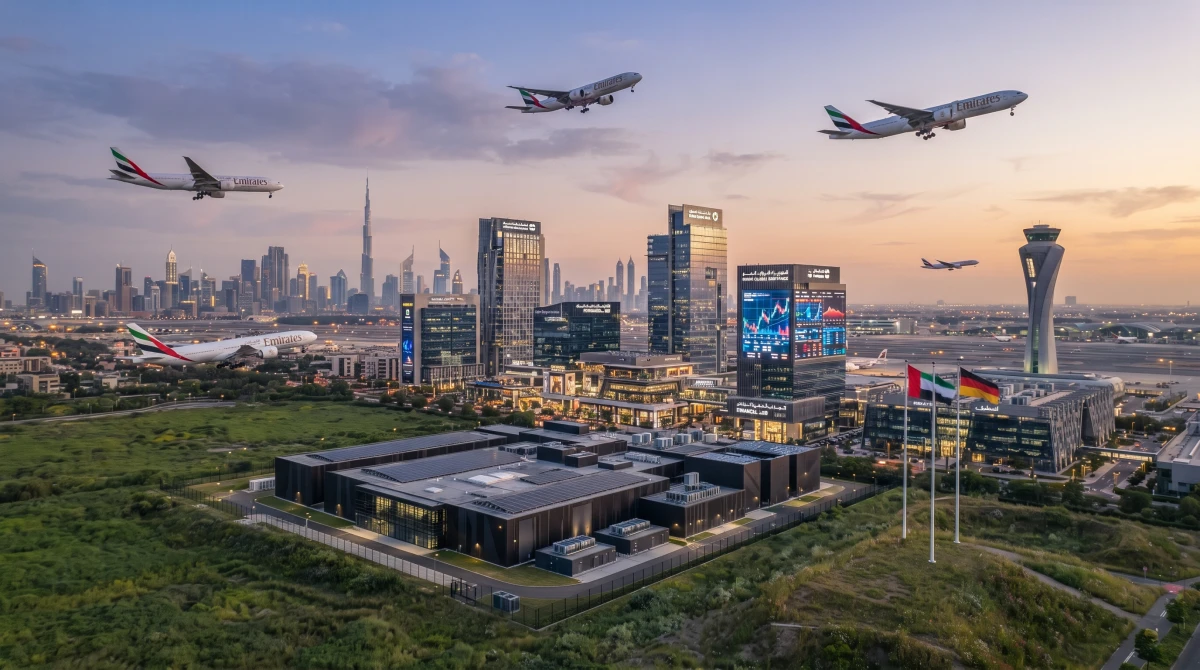
The investment package spans digital infrastructure, energy and advanced industry, but much of the announced value remains tied to preliminary agreements that must still become funded projects.
The United Arab Emirates plans to invest €40 billion ($46.4 billion) in Germany, placing Emirati capital behind data centres, energy infrastructure and advanced industry as Europe’s largest economy looks for new sources of investment.
The package was announced during President Sheikh Mohamed bin Zayed Al Nahyan’s state visit to Germany. It adds to an estimated €34 billion of existing UAE investment in the country and includes €10 billion earmarked for Bavaria.
UAE and German companies also signed 29 agreements and memoranda valued at more than €9.35 billion. The two governments agreed to establish a bilateral Investment Council intended to connect public institutions with companies and help projects move from negotiation to execution.
For the UAE, the plan is more than an overseas investment allocation. It offers access to German industrial expertise, technology and energy assets at a time when Gulf capital is playing a larger role in financing European infrastructure.
Yet the headline numbers require careful interpretation. The €40 billion is an investment package expected to be deployed across several sectors, not evidence that the entire sum has already been transferred. Several company-level deals are memoranda of understanding or letters of intent whose final size will depend on later contracts, regulatory approvals and commercial negotiations.
Data centres take a central role
Digital infrastructure is one of the clearest priorities in the package.
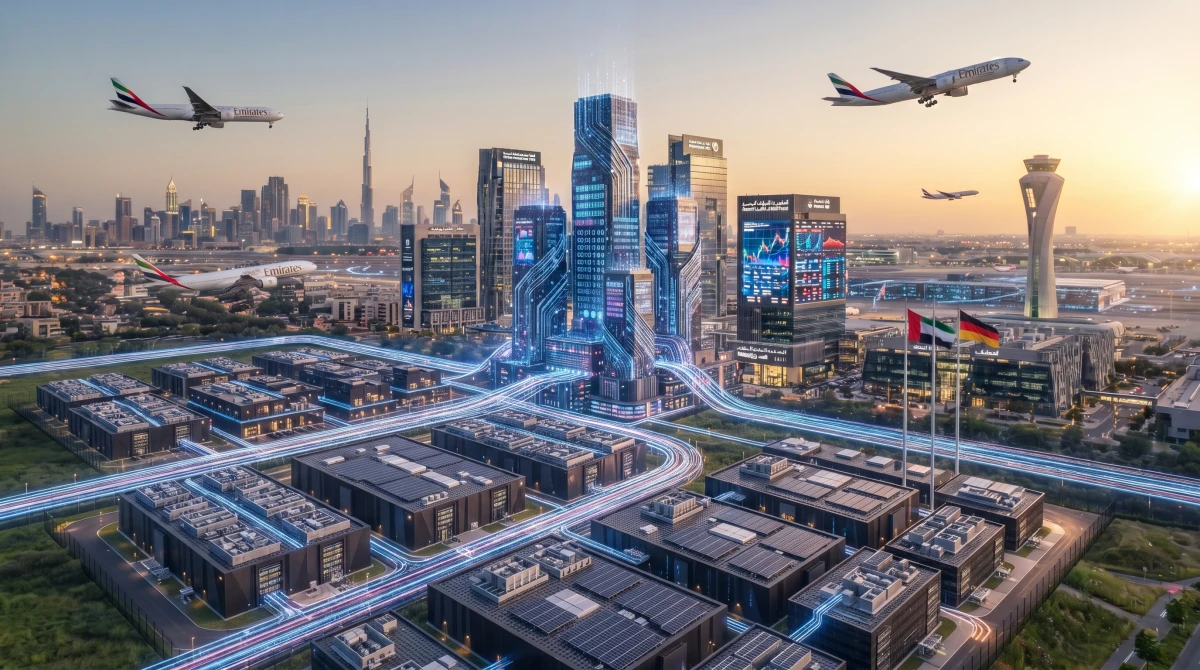
The joint UAE-German declaration refers to new data centres with a combined capacity of approximately one gigawatt. A facility of that scale would require substantial investment in land, power generation, grid connections, cooling and specialised computing equipment.
The plan links the UAE’s appetite for artificial-intelligence infrastructure with Germany’s industrial base and access to the European market. Germany offers research institutions, engineering expertise and large corporate customers, although its high electricity prices and lengthy planning procedures have sometimes constrained infrastructure development.
German authorities said they would seek to provide a favourable environment for implementation. The wording indicates political support, but it does not settle the practical issues surrounding grid capacity, construction permits, energy sources or data-centre locations.
A German-UAE declaration on data hosting and information systems will also examine the idea of “data embassies”: infrastructure that allows sensitive information to be hosted in another jurisdiction under agreed legal and security protections.
For UAE investors, such projects could provide exposure to demand for cloud computing and AI services in Europe. They could also create opportunities for Emirati technology companies to work with German manufacturers, universities and software developers.
Financial returns will depend heavily on energy costs, customer commitments and access to advanced chips. One gigawatt describes potential power capacity; it does not reveal how much computing capacity will become operational or when revenue might begin.
Energy deals give the package more substance
Company agreements announced on September 11 provided more detail about where part of the capital could go.
Masdar signed a memorandum with German utility RWE to explore joint participation in Germany’s 2027 offshore-wind auctions. Reuters reported that the projects could involve more than €3 billion of investment.
Masdar also agreed with German energy-infrastructure investor Luxcara to assess offshore-wind and battery-storage opportunities worth more than €5 billion in Germany and other markets.
On conventional energy, ADNOC and RWE signed a letter of intent covering as many as two long-term liquefied-natural-gas supply agreements. The proposed contracts would serve German, European and Asian markets from the early 2030s, with supply expected to come from ADNOC Gas and XRG.
XRG, ADNOC and Germany’s state-owned energy company SEFE separately agreed to examine deeper cooperation in natural gas and LNG.
“The UAE and Germany are building on decades of trusted partnership to advance economic growth and shared prosperity for the long-term,” UAE Industry Minister and ADNOC chief executive Sultan Al Jaber said.
These agreements show the dual nature of the relationship. Germany needs renewable investment but also wants secure gas supplies during its energy transition. The UAE can provide both capital and energy, while gaining positions in European infrastructure and long-term markets for its exports.
None of the agreements guarantees that every proposed project will proceed. Offshore-wind investments will depend partly on auction results, while LNG contracts still require the parties to agree prices, volumes, delivery terms and duration.
UAE capital moves deeper into European industry
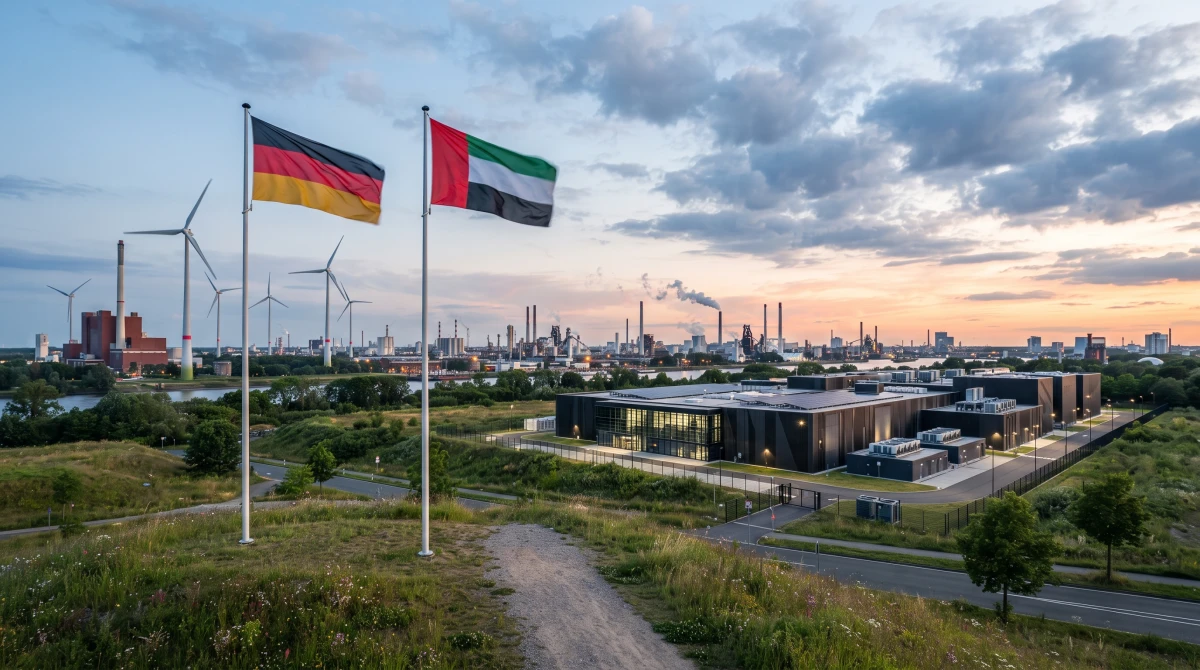
The new programme follows XRG’s approximately €15 billion investment in German chemicals group Covestro. That transaction gave the UAE a major position in a European industrial company whose products are used in construction, vehicles, electronics and other manufacturing sectors.
The wider package names Covestro, RWE, ADNOC and Masdar among the companies expected to support further partnerships.
This approach differs from buying a diversified portfolio of listed European shares. Direct investments in data centres, energy projects and industrial companies can provide greater strategic influence and closer commercial links, but they also concentrate risk and make capital harder to withdraw.
Germany’s economy offers advanced technology and engineering capabilities, yet it has struggled with slow growth, energy costs and pressure on energy-intensive manufacturers. Those problems may create attractive valuations for long-term investors, but they also explain why fresh capital is needed.
UAE policymakers appear to see an opportunity to combine capital with German technology. The joint declaration said non-oil trade between the countries reached $15.5 billion in 2025, up more than 14% from 2024. Cumulative bilateral investment flows exceeded $10 billion between 2021 and 2025, according to the two governments.
The countries are also supporting negotiations for a UAE-European Union trade agreement, which could reduce barriers for companies operating across both markets.
Dubai gains aviation and financial opportunities
Although much of the investment will originate through Abu Dhabi-linked institutions and companies, Dubai stands to benefit from the broader commercial relationship.
Germany agreed to add a fifth destination to the traffic rights available to one UAE national airline, allowing Emirates to establish regular service between Dubai and Berlin. The route would improve access for business travellers, investors and technology companies working between the two markets.
The decision is commercially significant because Emirates has long sought access to the German capital. German airline Lufthansa criticised the move, illustrating how transport rights can affect competition as well as diplomacy.
Dubai’s banks, law firms and financial advisers could also participate in financing, structuring and managing the announced investments. Large infrastructure projects require project finance, currency hedging, insurance, legal services and cross-border payment arrangements.
DIFC-based asset managers may gain opportunities to co-invest alongside Emirati institutions or create vehicles giving regional investors exposure to German infrastructure. German companies, in turn, may use Dubai as a base for expansion into the Middle East, Africa and South Asia.
Execution matters more than the headline
The €40 billion announcement gives the UAE-Germany relationship an unusually large financial target. It also demonstrates how the UAE is using international investment to secure technology, commercial access and political partnerships.
But investors should distinguish three separate figures: the €40 billion investment plan, the €9.35 billion value assigned to 29 company agreements, and the more detailed investment possibilities identified by individual companies. These amounts may overlap and should not automatically be added together.
The next evidence will come from named projects, binding contracts, financing arrangements and construction schedules. Data-centre locations and power agreements will be particularly important, as will the results of Germany’s offshore-wind auctions and the terms of any LNG purchases.
The package matters now because it creates a framework for a substantial movement of UAE capital into Europe. Its eventual value will be measured by how much of that framework becomes operating infrastructure and profitable investment.
Fact-check and sources
Frequently Asked Questions
What's Your Reaction?
 Like
0
Like
0
 Dislike
0
Dislike
0
 Love
0
Love
0
 Funny
0
Funny
0
 Wow
0
Wow
0
 Sad
0
Sad
0
 Angry
0
Angry
0

Journalist and commentator covering Dubai and the UAE, with a focus on local development, AI, finance, investment, cryptocurrency, technology, and major events. Focused on accurate reporting, insightful analysis, and informed perspectives on the trends shaping Dubai and the wider UAE.




Comments (0)