
Dubai Mainland Business License: Costs, Ownership, Tax and Setup Guide for 2026
A Dubai mainland business license allows companies to operate across the UAE domestic market. Learn about license types, 100% foreign ownership, setup requirements, office rules, taxation, costs and compliance in 2026.
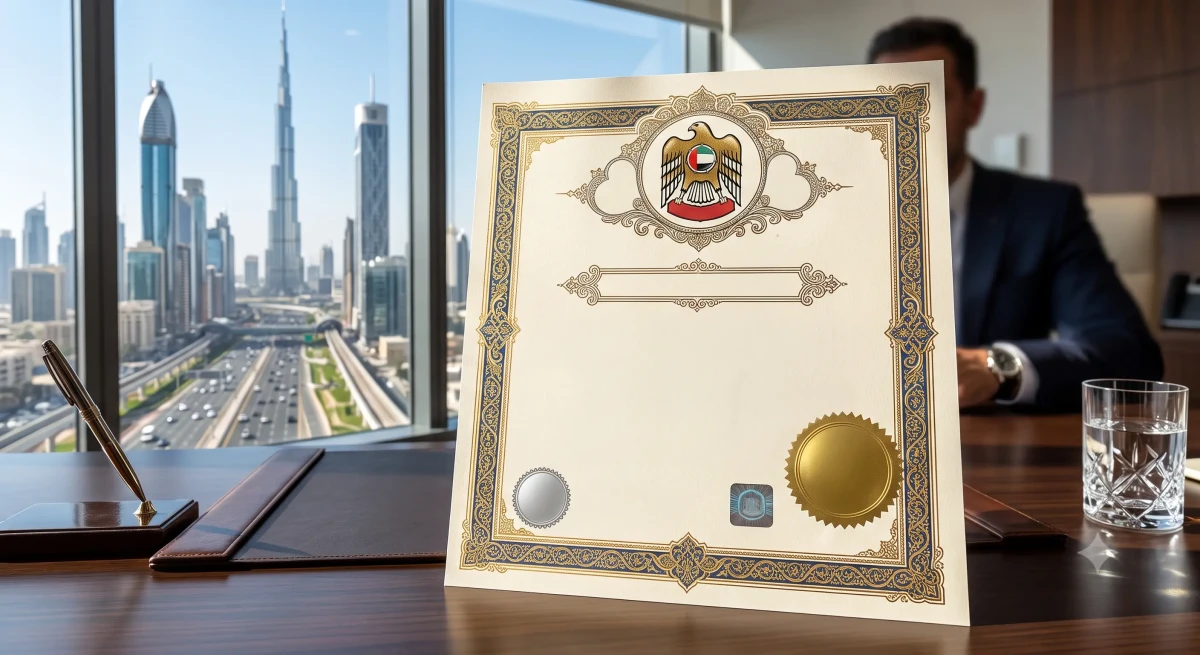
A Dubai mainland business license gives companies access to the UAE’s domestic market, with 100% foreign ownership available for many activities. Here is what investors need to know about licensing, costs, taxation, office requirements and compliance in 2026.
Dubai remains one of the UAE’s most important commercial hubs, attracting entrepreneurs, investors and international companies looking to establish a presence in the Middle East. For businesses targeting customers across Dubai and the wider UAE, a Dubai mainland business license can provide broader market access than many free-zone structures.
The license is issued by Dubai’s Department of Economy and Tourism (DET), and the appropriate license depends on the company’s business activity and legal structure.
For investors, however, setting up a mainland company is not simply a matter of paying a licensing fee. Office requirements, ownership rules, tax obligations, immigration, labour regulations and activity-specific approvals all affect the overall cost and operating structure.
What Is a Dubai Mainland Business License?
A Dubai mainland business license is the commercial authorization that allows a company to conduct approved economic activities in Dubai outside the emirate’s free zones.
Dubai’s official investment platform describes mainland establishment as the route for businesses that want to trade within the UAE rather than operate exclusively through a free-zone structure.
The major advantage is domestic market access. A mainland company can generally sell to customers across the UAE, subject to the rules applicable to its specific activity.
The license itself does not provide unlimited permission to conduct every type of business. Companies must select approved activities and obtain additional regulatory approvals where required.
100% Foreign Ownership Has Changed the Mainland Market
One of the biggest changes to the UAE business environment has been the relaxation of foreign ownership rules.
Historically, many mainland companies required a UAE national to hold 51% of the company. Amendments to the UAE Commercial Companies Law removed this requirement for many activities, allowing foreign investors to own 100% of eligible mainland companies.
A legal analysis of the reforms noted that the amendments removed the requirement for a UAE national to own at least 51% of shares, subject to applicable restrictions.
This means foreign entrepreneurs should no longer assume that a mainland company automatically requires a 51% Emirati shareholder.
However, 100% ownership is not universal. Certain strategic or regulated activities can remain subject to specific ownership and approval requirements. Investors should therefore check the exact activity before incorporating the company.
Types of Dubai Mainland Licenses
The type of license depends primarily on the economic activity the company intends to conduct.
Commercial License
A commercial license is generally used for trading and commercial activities, including buying and selling goods, retail businesses, import and export and certain commercial services.
Professional License
Professional licenses cover many consultancy, specialist and individual professional activities. Depending on the legal form and activity, additional requirements may apply.
Industrial License
An industrial license is designed for manufacturing and production businesses. Industrial activities can require additional approvals relating to premises, production facilities, environmental requirements and other regulatory matters.
Tourism License
Businesses operating in tourism and related activities may require approvals from Dubai’s tourism authorities in addition to their economic license.
Other Regulated Activities
Certain businesses, including healthcare, education, financial services, transportation and other regulated sectors, may require approvals from specialized government authorities before operations can begin.
The important point for investors is that the activity code matters. Choosing an incorrect activity can create compliance problems and may prevent a company from legally providing a particular service.
How to Obtain a Dubai Mainland Business License
The licensing process generally follows several stages.
1. Select the business activity and legal structure
The investor first identifies the intended economic activity and chooses an appropriate legal form, such as an LLC, sole establishment, branch or another permitted structure.
2. Reserve the trade name
The proposed company name must comply with Dubai's naming requirements and be registered through the relevant government channels.
3. Obtain initial approval
Initial approval indicates that the government has no objection to establishing the proposed entity, although it does not itself authorize the company to commence all business operations.
The UAE Ministry of Economy and Tourism explains that initial approval means the government has no objection to establishing the entity in the UAE.
4. Prepare corporate documents
Depending on the legal structure, the company may need a Memorandum of Association and other constitutional or contractual documents.
5. Secure business premises
Dubai mainland businesses generally need an appropriate physical address. The UAE Ministry of Economy and Tourism states:
“All companies in the UAE must have an actual address for the economic activity.”
For Dubai, the lease must be registered through Ejari, the official tenancy registration system.
6. Obtain external approvals
Regulated activities may require approval from other government departments.
7. Pay applicable government fees and receive the license
Once the required documents and approvals are complete, the relevant authority issues the mainland business license.
How Much Does a Dubai Mainland Business License Cost?
There is no single fixed price for a Dubai mainland business license.
The total cost depends on several factors, including:
-
Business activity
-
Legal structure
-
Number of partners
-
Office requirements
-
Tenancy costs
-
Government approvals
-
Memorandum of Association and notarization requirements
-
Immigration and establishment-card costs
-
Employee visa requirements
-
Regulatory approvals
Therefore, quoting one “Dubai mainland license cost” without knowing the activity and business structure can be misleading.
For a new company, investors should distinguish between the license fee and the total cost of establishing and operating the business.
Office rent, visas, labour-related expenses, accounting, insurance, tax compliance and renewals can become significant recurring costs.
Office Requirements and Ejari
The physical office is an important financial consideration.
Unlike some free-zone packages that may offer flexible workspace arrangements, mainland businesses must comply with the applicable premises requirements for their activity.
The UAE government specifically states that companies must have an actual address for their economic activity and that, in Dubai, the lease contract must be registered through Ejari.
For businesses that require larger premises, warehouses, workshops or specialized facilities, property costs can represent a substantial portion of the company's annual operating budget.
Corporate Tax and VAT
The cost of a mainland license should also be considered alongside the UAE's federal tax framework.
The UAE corporate tax regime generally applies a 0% rate on taxable income up to AED 375,000 and 9% on taxable income above AED 375,000, subject to the rules and exemptions contained in the corporate tax legislation.
Businesses must also consider Value Added Tax (VAT). The UAE's standard VAT rate is 5%, with mandatory registration generally applying when taxable supplies and imports exceed the prescribed threshold.
This means business owners should budget for accounting, bookkeeping, tax registration and periodic filing requirements rather than treating the trade license as the only government-related expense.
Mainland vs Free Zone: Which Is Better?
The right structure depends on the company's commercial strategy.
A mainland company can be particularly attractive for businesses whose customers are located throughout the UAE or that want to participate directly in the domestic market.
A free-zone company can be attractive for businesses seeking a specialized ecosystem, international trading structure or a lower-cost startup package, depending on the free zone and activity.
The decision should therefore be based on the company's intended customers, physical presence, employee requirements, regulatory environment and long-term expansion plans—not simply on the cheapest license package.
What Investors Should Watch Before Setting Up
Entrepreneurs considering a Dubai mainland business license should focus on the total economics of the company.
First, select the correct business activity. Second, determine whether the activity permits 100% foreign ownership. Third, calculate the actual office and staffing requirements. Fourth, account for tax and annual compliance expenses.
Investors should also verify whether their industry requires approvals from another government authority.
The UAE's business environment has become significantly more investor-friendly, but regulatory requirements remain activity-specific.
The Bottom Line
A Dubai mainland business license can be a strong structure for entrepreneurs and international companies seeking direct access to the UAE market.
The biggest advantages are broad domestic market access and, for many activities, the ability to establish a company with 100% foreign ownership.
However, the headline license price should not be the only consideration. Office rent, visas, government approvals, taxation, accounting and annual compliance can materially change the total cost of running the business.
For investors evaluating Dubai in 2026, the most important step is therefore to determine the exact business activity and legal structure first, then calculate the full establishment and annual operating cost.
Official and Authoritative References
-
UAE Ministry of Economy & Tourism — Establishing a Business in the UAE: Government guidance covering business establishment, initial approval, premises and licensing requirements.
-
Invest in Dubai — Mainland Companies: Dubai's official investment platform for mainland business establishment.
-
UAE Government Portal — Corporate Tax: Official information on UAE corporate tax rates and thresholds.
-
UAE Commercial Companies Law: Federal legislation governing companies and corporate structures in the UAE.
-
Dubai Department of Economy and Tourism (DET): Dubai's competent authority for economic licensing and business registration.
What's Your Reaction?
 Like
0
Like
0
 Dislike
0
Dislike
0
 Love
0
Love
0
 Funny
0
Funny
0
 Wow
0
Wow
0
 Sad
0
Sad
0
 Angry
0
Angry
0

Finance news and analysis writer with two years of experience covering markets, AI, cryptocurrency, fintech, blockchain, investment trends, and digital economy developments for global readers.














Comments (0)