
The Loneliness Economy: Rethinking Scarcity in the Age of Artificial Intelligence
The Loneliness Economy explores how artificial intelligence is making knowledge more abundant while increasing the strategic value of human connection, trust, empathy, belonging and meaningful relationships.
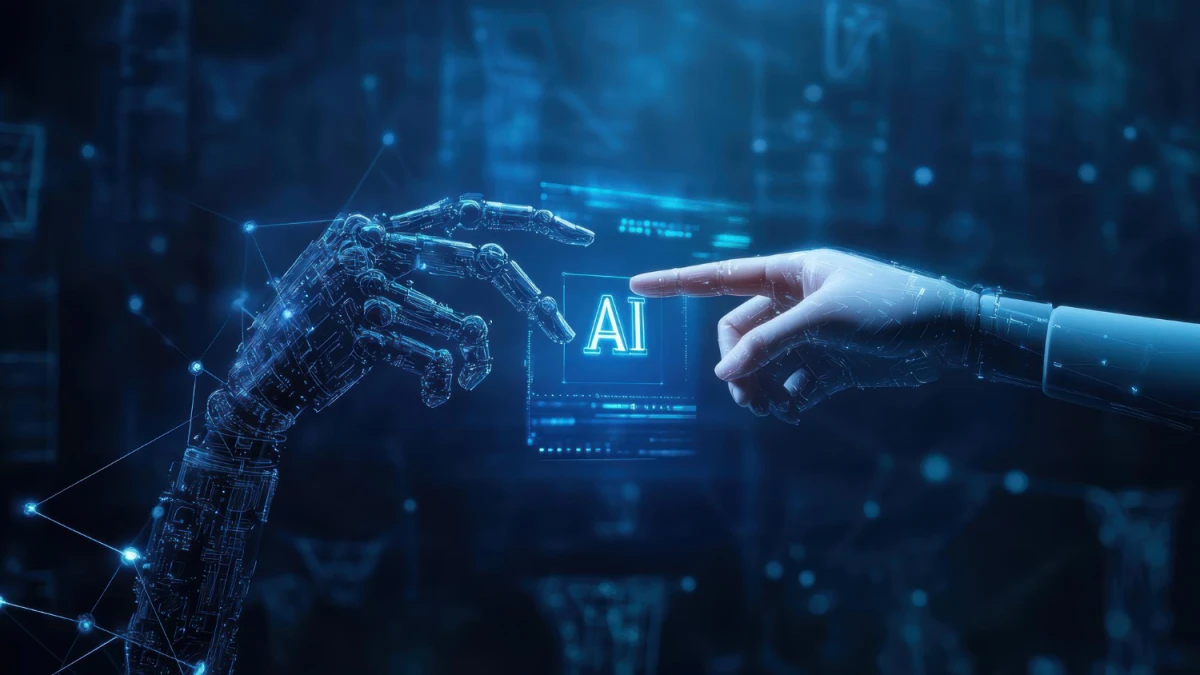
For centuries, economics has been built around one fundamental idea: scarcity creates value. Land, labor, capital and, later, information became critical economic resources because access to them was limited.
But artificial intelligence is changing that equation.
Knowledge that once required years of education, expensive consultants or large research teams can now be accessed and processed in seconds. AI can summarize research, analyze markets, generate software, produce marketing campaigns, draft documents and support complex business decisions. As access to knowledge and digital capabilities becomes increasingly widespread, information itself may become less of a competitive differentiator.
This raises an important economic question:
When knowledge becomes abundant, what becomes scarce?
One answer is increasingly clear: human connection.
The emerging concept of the Loneliness Economy describes an environment in which authentic human connection becomes a scarce and valuable resource, creating economic value through trust, belonging, empathy, attention and long-term relationships.
This does not mean loneliness should be reduced to a commercial opportunity. Rather, it recognizes that social connection has consequences far beyond individual well-being. It can influence workplaces, customer relationships, organizational culture, productivity and economic resilience.
When Scarcity Moves, Competitive Advantage Moves With It
Economic history repeatedly demonstrates that technological change can alter the resources that determine competitive advantage.
The Industrial Revolution placed physical production and capital at the center of economic power. The Information Age elevated knowledge and data. The digital economy transformed information into a strategic asset.
The AI era may be different.
AI capabilities are becoming increasingly accessible to organizations of different sizes. Models, automation tools and software platforms can often be acquired without the enormous infrastructure previously required to compete technologically.
As technology becomes more accessible, organizations may find it increasingly difficult to differentiate themselves through technology alone.
The scarce resources are shifting toward qualities that cannot simply be downloaded or purchased: trust, credibility, empathy, attention, belonging and meaningful relationships.
These resources are difficult to manufacture at scale because they depend on repeated human experiences.
A customer can receive an automated answer in seconds. But feeling genuinely understood is different.
An employee can communicate with colleagues through digital platforms all day. But communication does not necessarily create connection.
The distinction between the two could become increasingly important.
The Economic Cost of Disconnection
Loneliness is often treated primarily as a psychological or public-health issue. Yet its consequences extend into workplaces, communities and economies.
The World Health Organization's Commission on Social Connection reported in 2025 that approximately one in six people worldwide experience loneliness. The WHO also found that loneliness and social isolation affect health, well-being, employment and economic resilience. Its research emphasizes that social connection is not simply an individual concern but a foundation for functioning communities and economies.
The WHO distinguishes loneliness from social isolation. Loneliness is the subjective feeling that one's social relationships do not meet desired or needed levels of connection, while social isolation refers more objectively to having too few relationships, roles or interactions.
For businesses, the implications are significant.
Disconnection can emerge gradually. Trust weakens. Collaboration becomes more difficult. Employees become less engaged. Customers become less emotionally attached to brands. Innovation can suffer when people no longer feel comfortable sharing ideas or challenging assumptions.
These effects may not immediately appear on a balance sheet, but they can eventually contribute to higher employee turnover, weaker customer loyalty and lower organizational performance.
In this sense, disconnection can become an economic cost even when it is not recorded as a separate financial line item.
The AI Paradox
The most common question surrounding artificial intelligence is whether machines will replace humans.
A more useful question may be:
What becomes more valuable when machines become more capable?
AI can process information, identify patterns and generate content at extraordinary speed. But greater machine capability may actually increase the premium placed on distinctly human qualities.
AI can analyze a customer's behavior. It cannot automatically create genuine trust.
It can predict what a customer might want. It cannot guarantee that the customer feels respected.
It can generate a message. It cannot independently create the lived experience of belonging.
This creates an AI paradox: the better technology becomes at performing tasks, the more valuable authentic human interaction may become in areas where relationships matter.
The competitive advantage may therefore belong not to companies that reject automation, but to companies that understand where automation should end and human connection should begin.
Customer Experience Moves Beyond Efficiency
For years, customer experience strategies have focused on reducing friction.
Businesses have invested in faster websites, automated support, personalization, recommendation engines, chatbots and predictive analytics. These technologies remain important because customers expect convenience and speed.
But convenience does not automatically create loyalty.
A customer may appreciate receiving an answer quickly. They become more likely to remain loyal when they believe a company understands them and genuinely values their relationship.
This creates a new opportunity for Customer Experience (CX).
The next generation of CX may combine digital efficiency with human empathy.
Automation can handle repetitive transactions, while people focus on complex, emotional or high-value interactions. AI can provide information, while employees provide judgment and reassurance. Digital platforms can make communication easier, while organizational culture determines whether that communication feels authentic.
In this model, technology does not replace human connection. It creates more space for it.
Human Connection Capital
If companies measure financial capital, intellectual property, data and technological capabilities, another strategic asset deserves consideration: Human Connection Capital.
Human Connection Capital can be understood as the accumulated value an organization creates through trust, belonging, empathy, collaboration and relationships with employees and customers.
It is similar to reputation in one important respect: it takes time to build but can be damaged quickly.
Organizations with strong human connection may be better positioned to retain talent, maintain customer relationships during difficult periods and encourage collaboration.
This capital cannot simply be acquired through software procurement. It develops through leadership behavior, employee experience, customer experience and consistent organizational decisions.
It is therefore less tangible than financial capital but potentially just as strategically important.
The Workplace of the AI Era
The workplace provides one of the clearest examples of this transition.
As AI takes over more repetitive analytical and administrative tasks, employees may spend more time on judgment, creativity, problem-solving, leadership and collaboration.
That means organizations will need to think carefully about the social environment in which those activities occur.
Employees who feel that they belong are more likely to participate, communicate and contribute. Psychological safety can encourage people to raise concerns, experiment with new ideas and challenge conventional thinking.
The WHO's recent work reinforces the broader importance of social connection, noting that disconnection can affect employment, productivity and economic outcomes.
The implication is straightforward: an AI-enabled workplace still requires a strong human operating system.
A New Definition of Competitive Advantage
For decades, businesses have asked:
-
How can we become faster?
-
How can we reduce costs?
-
How can we automate more?
-
How can we use data more effectively?
These questions remain important.
But the AI era adds another set of questions:
-
How much trust have we earned?
-
Do employees feel that they belong?
-
Do customers feel understood?
-
Where should human interaction replace automation?
-
Are we building relationships that competitors cannot easily copy?
These questions may appear less technical, but they could become increasingly important as technology becomes commoditized.
The organizations that succeed will not necessarily be those with the most AI tools. They may be those that combine advanced technology with exceptional human experiences.
The Future of the Loneliness Economy
The rise of artificial intelligence does not mean human connection will automatically become more valuable. Organizations must deliberately create environments where connection can flourish.
That means designing customer journeys that preserve meaningful human interaction, developing leaders who demonstrate empathy, creating workplaces where employees feel respected and building communities around brands rather than simply transactions.
The broader lesson is economic.
Scarcity has not disappeared. It has changed.
Information is becoming easier to access. AI is making knowledge increasingly abundant. Automation is making many forms of digital capability cheaper and faster.
At the same time, authentic attention, trust, empathy and belonging remain difficult to scale.
That creates the foundation for the Loneliness Economy.
The future will certainly belong to organizations that know how to use artificial intelligence.
But the organizations that create lasting competitive advantage may be those that understand something equally important:
Technology can automate tasks. It cannot automatically create trust.
AI can accelerate communication. It cannot guarantee connection.
Algorithms can optimize decisions. They cannot replace empathy.
As machines become smarter, the most valuable business resource may increasingly be something profoundly human: the ability to make another person feel understood, respected and connected.
That may be the defining scarcity of the AI era.
What's Your Reaction?
 Like
0
Like
0
 Dislike
0
Dislike
0
 Love
0
Love
0
 Funny
0
Funny
0
 Wow
0
Wow
0
 Sad
0
Sad
0
 Angry
0
Angry
0

Rana Koryem is an economist, corporate trainer, marketing strategist, and Customer Experience consultant focused on AI, leadership, customer experience, and organizational transformation














Comments (0)