
UAE Ministry of Finance Gives Youth a Bigger Role in Shaping the Future of Finance
The UAE Ministry of Finance is giving young Emiratis a stronger role in shaping the country’s financial future through youth councils, leadership programmes, innovation labs and practical financial training
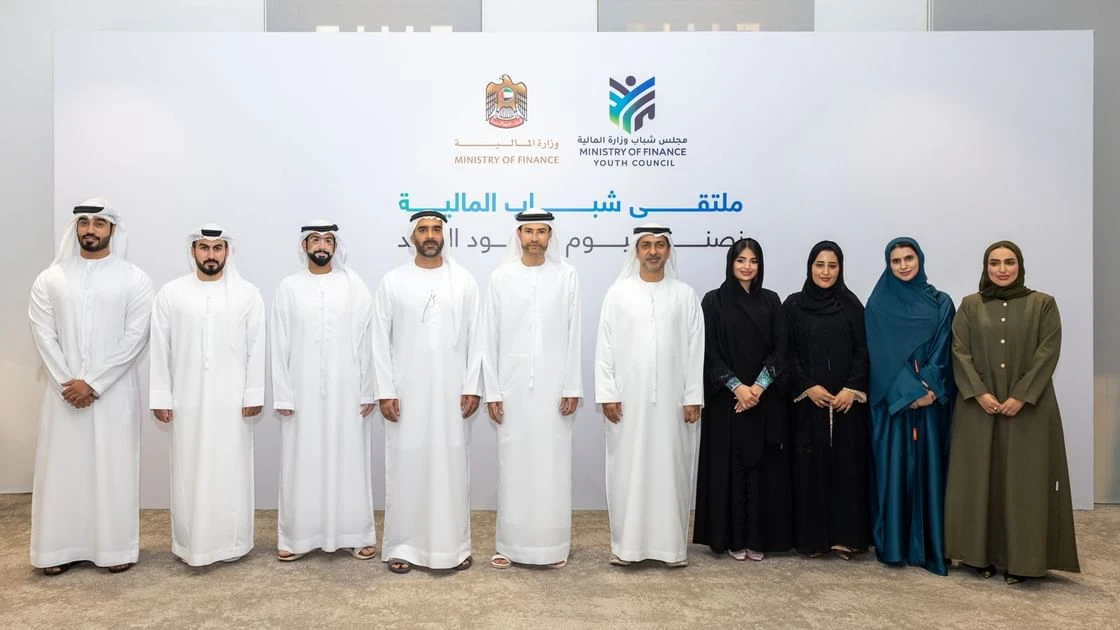
The UAE is placing a stronger emphasis on youth participation in the country’s financial and economic future, with the Ministry of Finance (MoF) expanding opportunities for young Emiratis to contribute ideas, develop professional expertise and take part in shaping government financial work.
The approach reflects a broader national strategy in which young people are viewed not simply as future employees or leaders, but as active contributors to the UAE’s development today. Recent Ministry initiatives, including the MoF Youth Forum, the MoF Youth Council and the Leaders of Finance initiative under the Youth Financial Advisors Programme, are designed to connect young talent with senior decision-makers, practical financial experience and innovation opportunities.
Why youth participation matters to the UAE’s financial future
For the UAE, developing a new generation of finance professionals is closely connected to the country’s long-term economic ambitions. Public finance today involves much more than conventional budgeting. Governments must increasingly deal with digital transformation, artificial intelligence, tax policy, investment, public debt, global economic shifts and the changing needs of younger generations.
That makes it important for young professionals to understand how financial decisions are made and, equally, for policymakers to hear the perspectives of people entering the workforce during a period of rapid technological and economic change.
The UAE’s National Youth Agenda 2031 reflects this thinking. The agenda identifies youth as an important force for national economic growth and focuses on future skills, career development and increasing opportunities for young Emiratis to contribute across promising and emerging sectors.
The Gulf-wide context also reinforces the importance of youth engagement. The World Economic Forum has noted that more than half of the GCC’s population was under the age of 25 in 2021, highlighting the importance of preparing young people for the region’s economic and social future.
MoF Youth Forum creates direct dialogue with leadership
One of the most visible examples of this approach is the Ministry of Finance Youth Forum, which provides a dedicated platform for young employees to exchange ideas with the Ministry’s leadership.
The forum is designed around dialogue rather than simply presentations. Young employees are given opportunities to raise questions, discuss challenges and share views about their careers and the future direction of government financial work.
A key feature is the “Ask the Leadership” session, where young employees can engage directly with senior officials. The format creates a more open channel between the Ministry’s younger workforce and its leadership, allowing questions about professional development, participation opportunities and the role of youth in government work.
The forum also includes a youth dialogue titled “From Ambition to Impact: MoF Youth Shaping the Future.” The session focuses on the experiences and ambitions of young employees and on how their ideas can be converted into practical contributions rather than remaining at the discussion stage.
This distinction is important. Effective youth engagement is not only about inviting young people into a meeting room. Its real value comes when ideas are evaluated, tested and potentially incorporated into institutional decisions.
Youth Innovation Lab turns ideas into practical solutions
The Ministry has also introduced the Youth Innovation Lab, giving young employees a practical setting to work on challenges and develop possible solutions.
According to the Ministry, the lab encourages participants to exchange perspectives, apply their knowledge and experience, develop innovative proposals and convert ideas into actionable initiatives.
This type of initiative is particularly relevant in finance, where technology is rapidly changing how governments operate.
Artificial intelligence, data analytics, digital payment systems and automated financial processes are changing the skills required across the financial sector. Younger professionals are often entering the workplace with strong familiarity with digital tools and new technologies. Giving them structured opportunities to apply those skills can help institutions identify new approaches while also developing future leaders.
For the Ministry, an innovation lab can therefore serve two purposes at the same time: improving institutional problem-solving and building the capabilities of the next generation of public finance professionals.
MoF Youth Council provides a continuing platform
The Youth Forum is not the only mechanism for youth participation. The Ministry of Finance has also established its Youth Council for 2024–2026.
The council provides young Emirati talent with a platform to contribute to initiatives and policies related to government excellence. It is also intended to encourage young employees to share innovative ideas and participate in shaping the financial future of the federal government.
The importance of a council structure is that it creates a continuing channel rather than a one-off opportunity.
A forum can generate attention and discussion, while a council can provide a more sustained mechanism for gathering proposals, identifying challenges and maintaining communication between young employees and senior management.
For young professionals, this can also make government careers more attractive by creating visible pathways for development, responsibility and leadership.
“Leaders of Finance” focuses on financial expertise
Another significant initiative is the Leaders of Finance programme, launched under the UAE’s Youth Financial Advisors Programme.
The programme was developed by the Ministry of Finance in partnership with the Federal Youth Authority, Central Bank of the UAE and Securities and Commodities Authority, along with national and private-sector entities. Its objective is to help qualify Emirati youth as financial advisers who can support financial education, encourage saving and investment, and better understand investment opportunities in the UAE market.
What makes the programme particularly relevant is its combination of academic learning and practical exposure.
Participants receive training covering areas such as budgeting, government financial management, tax legislation and international financial relations. The programme also provides exposure to areas including public debt management and digital transformation.
This matters because financial leadership requires more than theoretical knowledge. A future public finance specialist needs to understand how policies operate in practice, how institutions interact and how national financial decisions connect with the wider global economy.
The initiative also gives participants opportunities to interact with Ministry leaders and experts, helping bridge the gap between education and professional experience.
Financial literacy is becoming increasingly important
The focus on youth financial education is also relevant beyond government careers.
Young people entering adulthood increasingly face complex financial decisions involving saving, investing, credit, digital payments, insurance and long-term financial planning. Strong financial literacy can help individuals make more informed decisions and understand both opportunities and risks.
International education data suggest there is room for continued improvement. In the OECD’s PISA 2022 financial literacy assessment, students in the UAE achieved an average score of 441 points, compared with an OECD average of 498 points.
The figure should not be interpreted as a complete measure of the UAE’s financial capabilities, but it highlights why financial education remains relevant.
Initiatives such as the Youth Financial Advisors Programme can potentially create a multiplier effect. Training a group of young financial advisers can help extend financial knowledge beyond the participants themselves, particularly when they become capable of sharing what they have learned with peers and communities.
From government jobs to wider economic participation
Youth empowerment is also closely connected to the UAE’s broader employment strategy.
The country has been encouraging greater participation by Emiratis in the private sector through the Nafis programme and other labour-market initiatives. Employers covered by the Emiratisation programme have faced progressively higher targets, with the requirement reaching 10% by 2026.
This creates an expanding need for young Emiratis to build skills that work across both public and private sectors.
Finance is especially important because it sits at the centre of nearly every major industry. Professionals trained in budgeting, taxation, investment, accounting, risk management and financial technology can move across government institutions, banks, investment firms, businesses and international organisations.
That makes youth financial development not only a public-sector objective but also part of the UAE’s wider economic diversification strategy.
Learning from international examples
The UAE’s approach also reflects a broader international trend towards giving younger people a more direct role in public decision-making.
In Boston, for example, the Youth Lead the Change programme allows young people aged 12 to 25 to participate in a participatory budgeting process, where they can develop proposals and vote on projects for government implementation.
Such initiatives demonstrate an important principle: youth engagement becomes more meaningful when young people can see a connection between their ideas and real outcomes.
For the UAE, the next stage could involve expanding youth participation beyond internal dialogue and professional training into broader innovation, policy consultation and economic education programmes.
What this means for young Emiratis
For young Emiratis interested in finance, the Ministry’s growing youth programmes could provide more than networking opportunities.
They can offer exposure to government budgeting, taxation, public financial management, international finance and emerging areas such as digital transformation. Just as importantly, they can provide access to experienced officials and professionals who can help young employees understand how complex financial institutions operate.
For students and graduates, this also points to the value of developing a wider skill set. Traditional finance knowledge remains important, but future professionals are likely to benefit from combining it with data analysis, technology, communication, policy understanding and international exposure.
The direction is increasingly clear: finance careers are becoming more interdisciplinary, and the UAE is seeking to prepare young professionals accordingly.
A long-term investment in the UAE’s economic future
The Ministry of Finance’s youth initiatives should therefore be viewed as part of a larger national effort rather than as isolated programmes.
The Youth Council creates an institutional voice for young employees. The Youth Forum encourages direct dialogue with leadership. The Youth Innovation Lab provides a space for practical problem-solving. And the Leaders of Finance initiative develops specialised financial knowledge and real-world experience.
Together, these efforts signal a shift from simply preparing young people for future leadership to giving them meaningful opportunities to contribute now.
As financial systems become more digital, global and technology-driven, the UAE will need professionals who understand both established principles and emerging trends. Bringing youth into that process early can strengthen the talent pipeline, encourage innovation and create a stronger connection between national financial policy and the aspirations of the next generation.
The wider success of these programmes will ultimately depend on what happens after the forums and training sessions: whether ideas are implemented, whether participants progress into greater responsibility and whether financial knowledge reaches beyond government institutions into society.
That is where youth empowerment becomes more than a policy objective. It becomes an investment in the UAE’s long-term economic resilience, financial awareness and ability to adapt to a rapidly changing world.
What's Your Reaction?
 Like
0
Like
0
 Dislike
0
Dislike
0
 Love
0
Love
0
 Funny
0
Funny
0
 Wow
0
Wow
0
 Sad
0
Sad
0
 Angry
0
Angry
0

Journalist and commentator covering Dubai and the UAE, with a focus on local development, AI, finance, investment, cryptocurrency, technology, and major events. Focused on accurate reporting, insightful analysis, and informed perspectives on the trends shaping Dubai and the wider UAE.














Comments (0)