
DFSA Tokenisation White Paper: What Dubai Needs to Scale Tokenised Markets
The DFSA’s new tokenisation white paper identifies the infrastructure, custody, settlement and interoperability conditions that could shape Dubai’s next digital-finance phase.
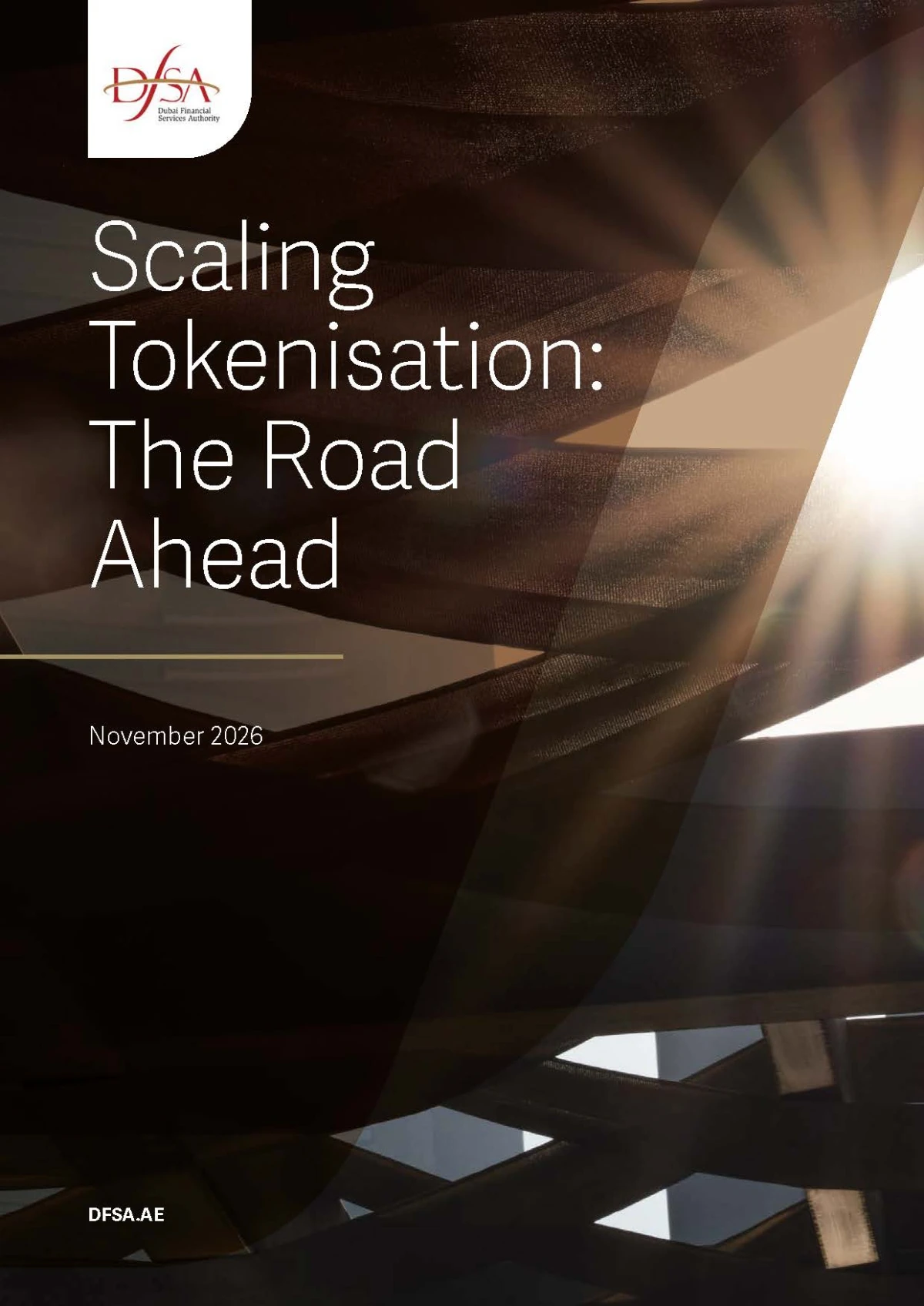
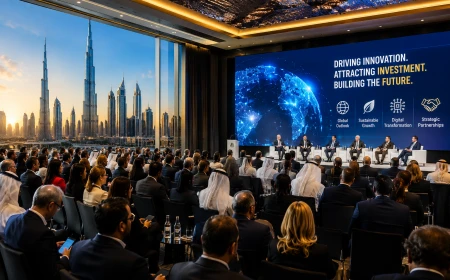
The Dubai Financial Services Authority (DFSA) has put a sharper frame around the next phase of digital-asset market development: the hard question is no longer whether tokenisation can work, but what must be in place for it to work safely at scale. Its new white paper, Scaling Tokenisation: The Road Ahead, was launched during Dubai Future Finance Week and examines the market infrastructure, governance and cross-border coordination that tokenised financial assets will need.
For Dubai fintech firms, banks, asset managers and infrastructure providers, the paper is useful precisely because it is not a product endorsement or a prediction of a single winning technology. It is a practical map of the dependencies behind broader institutional use: custody, settlement assets, interoperability, legal certainty and commercially viable market participation. The DFSA says the paper draws on market perspectives and does not prescribe a particular regulatory, commercial or technical outcome.
Why the DFSA tokenisation white paper matters in Dubai
Tokenisation is the process of representing rights in an asset or financial instrument through a digital token and related records or infrastructure. That definition leaves room for very different use cases: funds, bonds, sukuk, collateral, cash-like settlement instruments and market-infrastructure services may all involve tokenisation in different ways. It does not mean that every token is a crypto asset, and it does not remove the need for legal ownership, investor protection, operational controls or regulatory compliance.
The DFSA’s central observation is that the technology has begun to move from trials towards more practical applications, but adoption is still concentrated in selected asset classes and use cases. That is an important distinction for the Dubai market. A technically successful issuance or pilot is not, on its own, a liquid and scalable market. The people and institutions needed to issue, distribute, hold, price, settle, safeguard and supervise an asset have to be able to work together.
The DFSA regulates financial services conducted in or from the Dubai International Financial Centre (DIFC). Its existing Tokenisation Regulatory Sandbox is designed to let eligible firms test tokenised investment products and services in a controlled environment. The new paper builds on that innovation-oriented context, while placing more emphasis on the conditions required beyond the test stage.
Five conditions for tokenised markets to scale
The paper highlights five connected themes. First, network effects matter. Issuers, investors, intermediaries, technology firms and settlement providers must be able to connect across a wider ecosystem. A closed platform may prove a workflow, but it can struggle to deliver the broader liquidity and efficiency that supporters of tokenisation often expect.
Second, cross-border coordination and common standards are likely to be important. Markets do not need every jurisdiction to adopt identical rules before innovation can continue, but inconsistent legal, technical and operating assumptions can create costly fragmentation. For Dubai-based firms serving regional or international clients, that means cross-border design should be considered early rather than treated as a later integration problem.
Third, custody remains fundamental. Institutional participants need confidence that controls over private keys, asset records, operational resilience and recovery procedures are appropriate for the product they are using. The DFSA’s message is not that custody is a back-office detail; it is a precondition for trust when firms consider larger-scale deployment.
Fourth, the market needs trusted digital settlement options. The white paper points to possible models including regulated stablecoins, tokenised commercial-bank deposits and wholesale central-bank money. These are different models with different risk, legal and operational characteristics. The meaningful test is whether a settlement asset is trusted, broadly usable and capable of supporting the transaction workflow at issue—not whether it carries a fashionable label.
Fifth, interoperability is crucial. It spans more than a technical bridge between blockchains. Trading venues, custodians, settlement systems and traditional market infrastructure also need workable procedures, legal clarity and regulatory coordination. Without that, the market risks developing isolated digital islands that fragment liquidity rather than improving it.
What the update means for UAE financial firms and fintech builders
The paper offers a useful due-diligence lens for teams assessing a tokenisation project. Before focusing on token design or user interface, a firm can ask: who will custody the asset; what settles the transaction; which parties can access the network; how will data, transfers and exceptions be handled; and what happens when activity crosses a legal or technical boundary? Those questions are as relevant to an established financial institution as to a fintech startup.
Firms considering regulated activity in or from the DIFC should also distinguish product strategy from permissions. The DFSA explains that its Innovation Testing Licence programme is for businesses ready to begin live testing with customers, subject to restrictions and an authorisation process. A sandbox is not a blanket permission to market or operate a fully scaled financial service. Firms should review the applicable rules and seek appropriate professional advice where needed.
The broader UAE regulatory landscape is also developing. The DFSA’s Crypto Token framework was updated in January 2026, with firms responsible for documented suitability assessments when engaging with crypto tokens. That framework should not be treated as interchangeable with every tokenisation model, but it underscores the direction of travel: governance, suitability, custody and disclosure stay central as technology changes.
A measured signal, not a market forecast
The DFSA says tokenisation does not appear to create a material financial-stability risk at its current scale, while noting that implications could grow as tokenised markets become more connected to traditional finance and expand across trading, settlement, collateral and funding. This is a measured regulatory assessment, not a promise about asset values, adoption speed or the success of any individual platform.
For Dubai’s fintech ecosystem, the opportunity is therefore practical. Builders that solve genuine interoperability, custody, compliance or settlement problems may be better placed than those relying on a token label alone. The next useful step is to read the full DFSA white paper, map its themes to the proposed operating model, and confirm the relevant regulatory route before launch.
Sources: DFSA, published 5 and 10 November 2026; Emirates News Agency reporting on 10 November 2026. This article is for information only and is not investment, legal or regulatory advice.
What's Your Reaction?
 Like
0
 Dislike
0
 Love
0
 Funny
0
 Wow
0
 Sad
0
 Angry
0

Journalist and commentator covering Dubai and the UAE, with a focus on local development, AI, finance, investment, cryptocurrency, technology, and major events. Focused on accurate reporting, insightful analysis, and informed perspectives on the trends shaping Dubai and the wider UAE.








Comments (0)